
A practical digital marketing journey, from the first foundation to measurable growth
Every Saturday morning, while most of Umhlanga was easing into the weekend, Naledi Dlamini was already busy in her kitchen. During the week, she was a senior finance manager. On Saturdays, she became the person friends, relatives and colleagues called when they wanted generous home-cooked food that felt special.
The compliments came easily. So did the first orders. One customer told another, family WhatsApp groups carried photographs of her food, and people began asking whether they could order for birthdays, small events and Sunday lunches. What began as something Naledi loved doing started to look like a real business.
She called it Naledi’s Kitchen.
There was only one problem. Outside her immediate circle, almost nobody knew it existed.
“I don’t want pretty. I want results.”
A good product is not the same as a visible business
Naledi had already proved something important. People liked her food and were willing to pay for it. But a viable product does not automatically create a reliable stream of customers. Her business lived in scattered messages, word-of-mouth recommendations and photographs saved on different phones.
A prospective customer could not quickly see what she offered, understand how ordering worked or decide whether she looked credible. If someone searched online for home-cooked catering near Umhlanga, Naledi’s Kitchen had almost no chance of appearing. If a previous customer wanted to recommend her, there was no single, professional place to send them.
This is where many businesses find themselves. Some are new, like Naledi’s. Others have traded for years and already have a website, but the website is slow, unclear or invisible in search. In both cases, the underlying problem is similar. The business may be good, but its digital foundation is not helping enough people discover and choose it.
Step one, build a foundation that makes the next action obvious
Naledi did not need every possible marketing channel on day one. She needed a dependable starting point. That meant choosing the right domain name, creating a professional website and ensuring it worked properly on a mobile phone. Most of her potential customers would first encounter the business on a small screen, often while moving between other tasks.
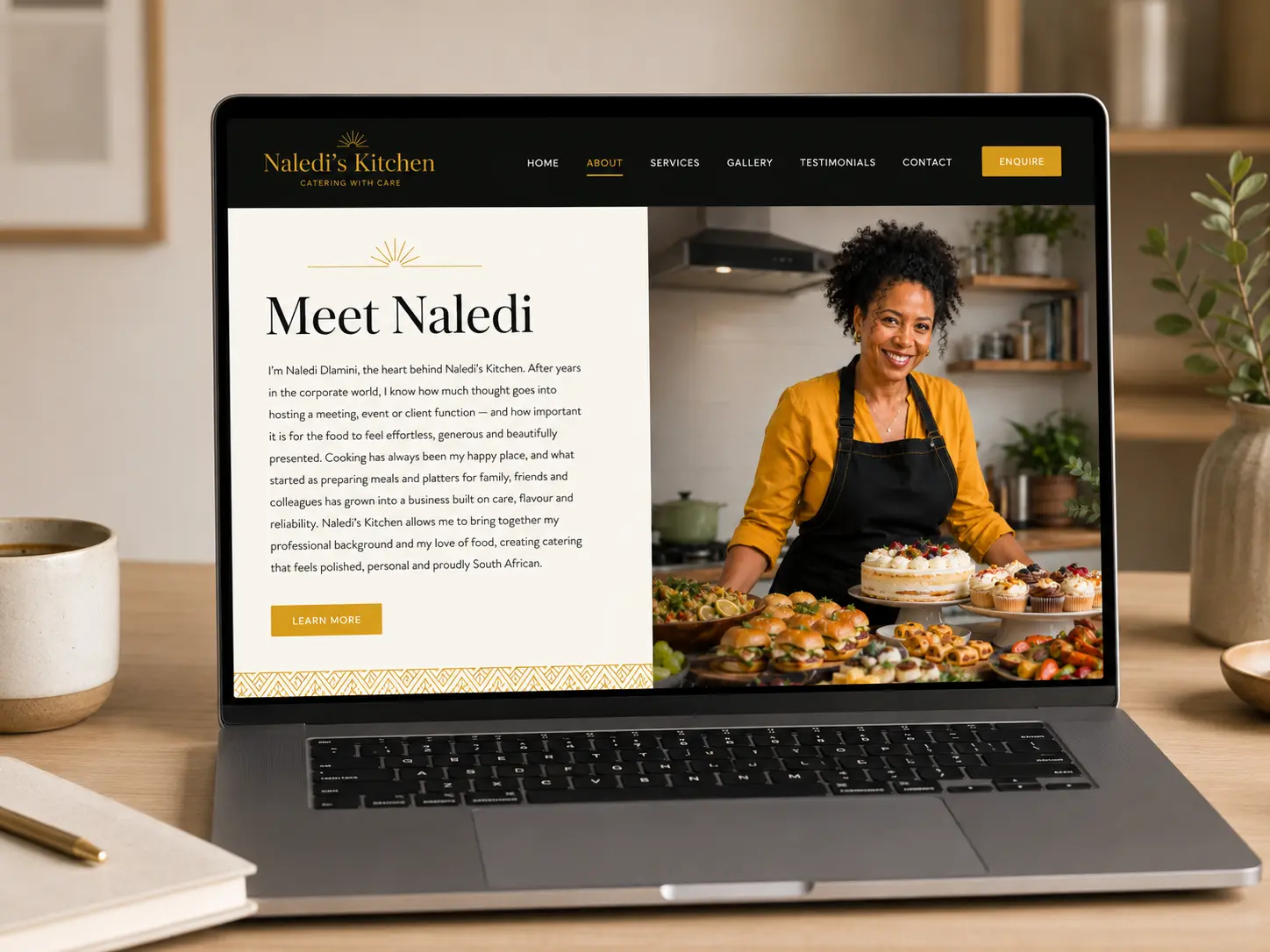
The website had a simple job. It needed to explain what Naledi’s Kitchen offered, show the quality and personality behind the food, answer the most important questions and make the next step easy. A visitor should not have to hunt for instructions. They should be able to call, send a WhatsApp message or place an enquiry with confidence.
The site also needed secure hosting, sensible maintenance and a structure that could grow with the business. Naledi was still working from her home kitchen, but she could imagine a future in which demand justified a dedicated industrial kitchen. Her digital platform had to support the business she had now without limiting the business it might become.
This is an important principle. A website is not a brochure that happens to sit online. It is the centre of a connected marketing system, where interest should turn into action and every future campaign should have somewhere useful to send people.
Step two, turn experience into trust
Once the foundation was in place, Naledi needed to give people reasons to believe her. Strong photographs helped, but trust also came from the words around them. Clear service descriptions explained what customers could order. An authentic About section introduced Naledi and the care behind the business. Frequently asked questions removed uncertainty about lead times, quantities, collection and delivery.
Helpful content could then answer the questions customers were already asking. A short article about planning food for a small family celebration, for example, would be useful to a real buyer. It would also give search engines more context about what Naledi’s Kitchen did and where it served customers.
This is the practical role of search engine optimisation (SEO). It is not a collection of tricks or a promise of instant rankings. It is the disciplined work of making a website fast, mobile-friendly, technically clear and genuinely useful for the searches that matter to the business.
Good copy and SEO reinforce each other. The language helps people understand the offer, while the structure helps search platforms understand when the business may be relevant. Over time, useful content, consistent business details and genuine customer feedback build authority that a brand-new advert cannot manufacture on its own.
Step three, be present wherever customers are looking
A website is central, but customers do not always begin there. Some search on Google, some use maps, and some ask an artificial intelligence (AI) assistant to recommend an option. Naledi’s business therefore needed accurate, consistent information across its website, Google Business Profile and relevant directories.
That consistency matters. The business name, location, service area, contact details and offer should support one clear picture. Structured information on the website can help search platforms interpret the business, while useful, specific content gives modern AI tools more evidence to work with when they assemble answers.
No business can force Google, ChatGPT, Claude or Perplexity to recommend it. It can, however, make itself easier to understand and verify. Clear expertise, well-organised pages, trusted mentions, customer reviews and accurate local information all strengthen the digital signals around a business.
For Naledi, visibility was no longer about simply having a website. It was about creating a credible presence that could be discovered across the places where people now ask questions and make decisions.
Step four, stay connected after the first visit
Not every visitor is ready to order immediately. Someone may be planning an event next month. Another person may simply love the photographs and want to remember the business. If Naledi relied only on a first website visit, much of that interest would disappear.
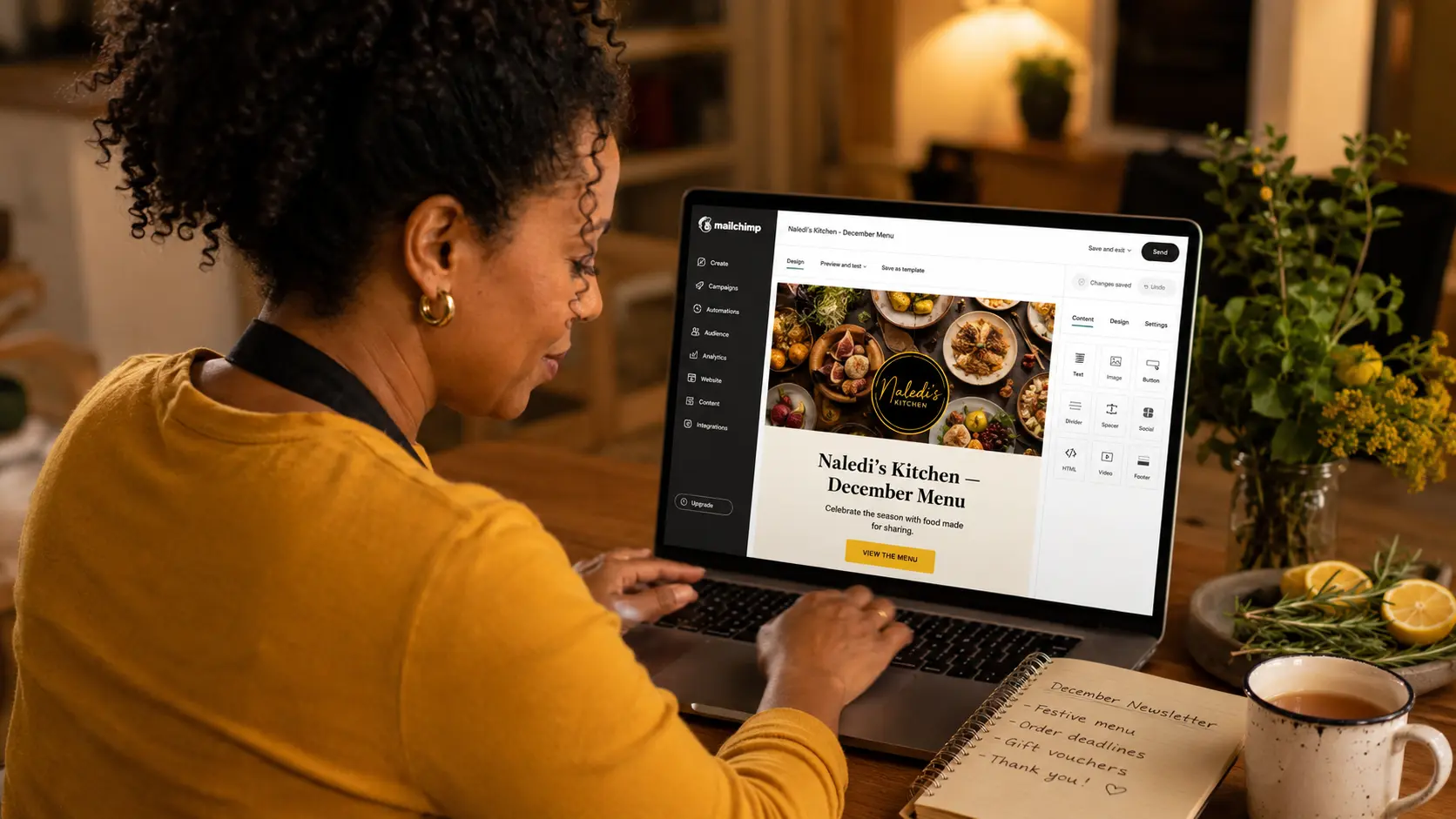
An email list gave her permission to continue the conversation. She could share a seasonal menu, announce ordering dates, offer practical hosting ideas or introduce a new service. The purpose was not to fill inboxes for the sake of activity. It was to remain useful and familiar until the customer’s timing was right.
The same principle applies to social media. A post may create awareness, a Reel may show the energy of the kitchen, and a Story may prompt an immediate response. Each format has a different rhythm, but the message should lead back to the same recognisable business and the same clear next step.
Step five, use paid advertising when the foundation can support it
There came a point when Naledi wanted to reach beyond her existing network. Google Ads could place the business in front of people already searching for an answer. The opportunity was powerful, but only if the campaign was connected to the right page and measured properly.
Paying for clicks without knowing what happens afterwards is not a growth strategy. Naledi needed to track meaningful actions, including enquiries, calls and WhatsApp contacts. That would show which searches and advertisements were producing real interest, and which were merely consuming budget.
Measurement changes the conversation. Instead of asking whether the advert looked good or whether traffic increased, Naledi could ask how many genuine opportunities the campaign created and what each one cost. The goal was not more marketing activity. It was better business results.
This is also why the sequence matters. Advertising can amplify a strong offer and a well-built customer journey. It cannot repair a confusing website, unclear pricing signals or a business that is difficult to contact. Build the foundation first, then use paid reach deliberately.
The real journey is connected, not complicated
Naledi’s progress did not come from finding one magic platform. It came from connecting the parts. Her website created a credible home. Content and SEO helped customers and search engines understand the business. Email and social media kept the relationship active. Paid advertising introduced the offer to people with intent. Measurement showed what deserved more attention. AI visibility became the next layer of discovery, supported by the same clear and trustworthy foundation.
That connected approach is just as relevant to an established business whose website has stopped producing results. The starting point may be different, but the questions remain practical. Can the right people find you? Do they understand what you offer? Do they trust what they see? Is the next action obvious? Can you tell which marketing activity creates genuine enquiries?
Naledi’s Kitchen is fictional, but the situation is familiar. Many excellent businesses are still relying on reputation alone, sending potential customers to an outdated website or spending on advertising without reliable tracking. They do not necessarily need more noise. They need a clear route from discovery to decision.
Where is your business on this journey?
Perhaps you are at Naledi’s first stage, with a good idea and no real online foundation. Perhaps you already have a website, but it is not generating the calls and enquiries you expected. Or perhaps you are investing in campaigns and cannot confidently explain what is working.
Wherever you are, the next step should be based on the gap that is holding the business back, not on whichever marketing tactic happens to be fashionable this month.
LET’S FIND YOUR NEXT STEP
Request a free strategy call with Select Web. We will look at where your business is now, where the strongest opportunities may be, and which part of your digital foundation should come next.
REQUEST A FREE STRATEGY SESSION